



This update focuses on Italy language integration. As Italy hardens its stance on language requirements at school, the story of Mohamed, a Moroccan who has lived in the country for 45 years, offers a human look at how such policies affect migrant families.
Italy language integration and a tense political debate
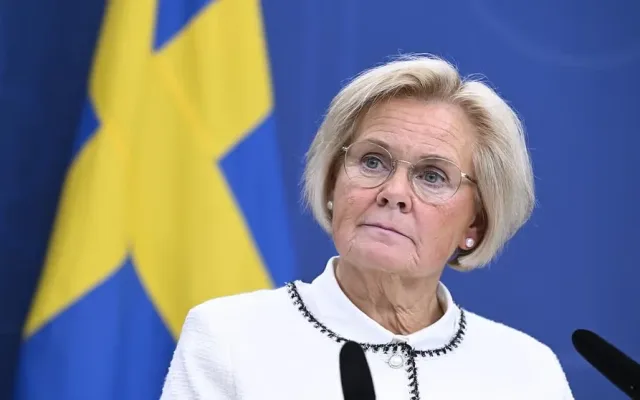
Mohamed’s story emerges just as the Italian government prepares a new decree on language skills in schools. Education Minister Giuseppe Valditara wants to cap at 30% the share of pupils in each class who do not have sufficient command of Italian.
The proposal also introduces mandatory language classes for some foreign parents when their children face serious academic difficulties. For many immigrant families, including Moroccans across Italy, this raises questions about how far the state can go in regulating integration.
For Moroccans living abroad, especially those who have parents or children in Italian schools, the Italy language integration debate is more than an abstract political argument. It shapes access to education, services and, ultimately, a sense of belonging.
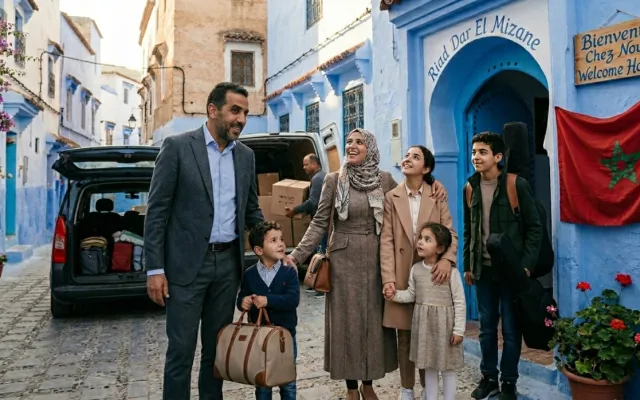
A Moroccan father, 45 years of life in Italy
Mohamed is 75. He has lived in Italy for 45 years. He worked there, raised his children and watched his grandchildren be born. He follows Italian politics and reads local newspapers. Yet his Italian remains the language he picked up on the job.
When he left Morocco, he had only completed primary school. His wife, Khadija, could neither read nor write Arabic. Neither of them attended any formal Italian language course. Like many first-generation Moroccan workers, they learned through colleagues, shopkeepers and neighbours.
Their daughter, journalist Karima Moual, arrived in Italy at the age of nine, in 1990. She remembers parents who were entirely focused on one goal: keeping the family afloat. Their time and energy went into extra shifts, not grammar books.
When Italian slips out in the streets of Casablanca
During a trip back to Morocco, one scene captures years of migration in a few seconds. Walking in Casablanca, Mohamed spontaneously addresses someone in Italian. Out of habit. His daughter laughs and gently reminds him: “Dad, we’re in Casablanca and you’re speaking Italian!”
The reflex says it all. After decades in Italy, the language of the host country has become second nature, even during visits home. At the same time, his grandchildren sometimes correct his expressions and accent. The youngest, just seven, enjoys fixing his mispronounced words.
Many Moroccan families abroad will recognise this situation, whether they live in Italy, France, Spain or elsewhere. Children often become linguistic go-betweens, mediating between their parents and the institutions of the host country.
What this story reveals about integration
For Karima Moual, Italy cannot reduce integration to a simple question of individual will. She rejects the idea that parents who speak imperfect Italian necessarily lack the desire to fit in.
Her father learned the words he needed where he spent his days: in factories, on building sites, at work. Like many Moroccans who left in the 1970s, 1980s and 1990s, he first had to deal with economic urgency.
This experience raises deeper questions about Italy language integration and how states design their policies. Is it enough to put pressure on families, or should there be stronger support for parents who had little schooling, sometimes even in their home country?
Lessons for Moroccans living abroad
For Moroccans around the world, Mohamed’s story underlines several practical points:
- the need to anticipate language learning in the host country, for both parents and children;
- the central role children play as intermediaries with schools and administrations;
- the importance of closely following education reforms, which can shape the future of young Moroccans abroad;
- the question of maintaining links with Morocco, through holidays, dual schooling or a possible return.
For families planning to move back and forth between Europe and Morocco, strong language skills are a real asset. They make it easier to handle paperwork on both sides of the Mediterranean and help younger generations feel at ease in both worlds.
Beyond the Italian case, similar debates on language in schools are emerging across several host countries. Moroccan families must navigate a multilingual reality: Arabic, Amazigh and Darija on the Moroccan side, plus one or more languages in their country of residence.
In this complex landscape, stories like Mohamed’s remind us that every reform affects lives built between two shores, and that integration is lived day by day, not only written in decrees.
For more context, readers can follow Canal212 news for Moroccans abroad.
For official updates, readers can check the relevant official source.


Comments