




The Moroccan automotive industry has been pushed into the spotlight as Brussels prepares new rules on local content in Europe.
Moroccan automotive industry: what to know
As the European Union finalises its proposed Industrial Accelerator Act (IAA), some Italian manufacturers want parts made in Morocco to be excluded from what counts as European content.
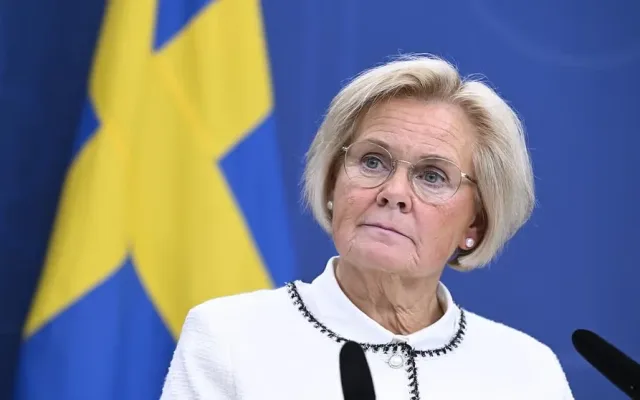
In an interview with Reuters, Roberto Vavassori, head of the Italian industry association Anfia (Associazione Nazionale Filiera Industria Automobilistica), criticised the draft law, which is officially designed to support industrial investment, decarbonisation and local production.
According to him, the current wording could actually encourage imports from countries with free trade agreements with the EU, such as Morocco and Türkiye, instead of boosting production inside Europe.
Italian concerns amid global competition
Vavassori’s comments come at a difficult moment for Italian suppliers. In 2025, they exported 4.9 billion euros’ worth of products to Germany, with up to 20% linked to Volkswagen.
The German carmaker’s recent restructuring, driven by slower demand and intense Chinese competition, is fuelling anxiety in Italy. Vavassori expects Italian exports to fall by about 10% this year, after a 4.6% decline in the first half.
Looking ahead, he does not rule out a 40% to 50% drop by 2028 if there is no stronger protection against imports from China, a scenario he bluntly describes as “game over” for the sector.
In this context, he is calling for 80% customs duties on Chinese vehicles and parts once they pass a certain import threshold. Below that, Chinese cars would remain exempt up to 8% of EU annual registrations.
Morocco in the crosshairs, but not alone
The Moroccan automotive industry, which has grown rapidly over the past decade, has become a symbol of the tension between national protection and open trade in Europe. Vavassori argues that allowing Moroccan parts to be counted as European under the IAA would accelerate Europe’s industrial decline instead of slowing it.
Morocco is not the only country at the heart of this debate. In France, the national automotive platform PFA, chaired by Luc Chatel, is also pushing for a tighter geographical scope for the future “Made in Europe” framework.
The PFA considers that the broad approach currently discussed dilutes the idea of European preference and blurs what it means to be an EU-made product. Supplier CLIFA has likewise warned that such openness would weaken the mechanism.
Germany, however, is defending a more open stance, betting on the integration of nearby partners in its industrial strategy.
What is at stake for Moroccans living abroad?
For Moroccans living abroad who follow developments in the Moroccan automotive industry, this European debate matters for several reasons:
- it can influence future industrial investment decisions in Morocco;
- it affects the long-term visibility of value chains linking Morocco to EU factories;
- depending on the final political compromise, it may reshape the competitive edge of “Made in Morocco” exports to Europe.
Today, Moroccan plants and automotive ecosystems are deeply integrated into European supply chains thanks to trade agreements with the EU. The IAA discussion does not question those agreements, but it could change how they are used when calculating local content.
MREs interested in industrial projects, free zones or automotive-related services therefore have a clear interest in following how negotiations evolve in Brussels. The final definition of the “Made in Europe” perimeter will show how far the EU is ready to include its Mediterranean partners in its industrial strategy.
Meanwhile, recent EU-level data from the European Automobile Manufacturers’ Association (ACEA) show that Chinese-branded cars exceeded a 9% market share in the bloc during the first half of 2026. This rise is fuelling protectionist reflexes in Europe, and Morocco is now experiencing the limits of those policies, despite being a privileged partner.
To assess the impact on Morocco’s economy and its macroeconomic stability, indicators and analysis from official institutions such as Bank Al-Maghrib remain key benchmarks for investors, including members of the overseas Moroccan community.
For more context, readers can follow Canal212 news for Moroccans abroad.
For official updates, readers can check the relevant official source.



Comments